State of Caring 2026 – Identifying unpaid carers: opportunities for recognition and support
To mark Carers Rights Day Carers UK published a new report, Identifying unpaid carers: opportunities for recognition and support which has been kindly sponsored by Standard Life and CSL Seqirus.*
The report shows that too many unpaid carers are missing out on vital support because services and organisations are failing to recognise their caring role or fully realise the extent of their responsibilities for family members and friends. Specifically, the research reveals that:
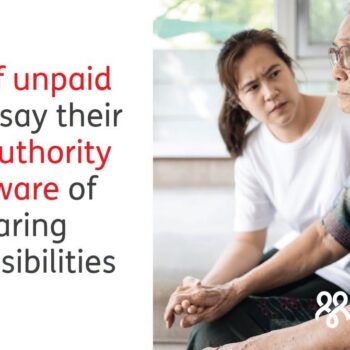
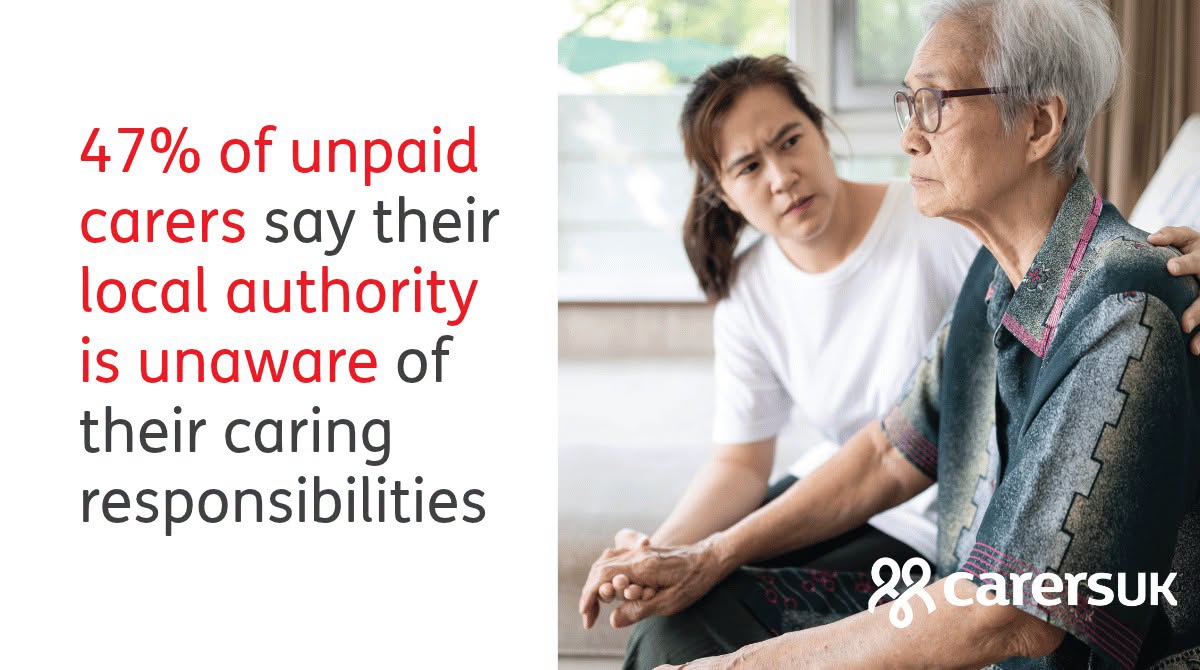
- nearly half of carers (47%) say their local authority is not aware of their caring responsibilities
- a third of carers (32%) say their GP is not aware they are a carer. 38% say the consultant or nurse in hospital was not aware.
- over a quarter (27%) of working carers do not know what the benefits of identifying as a carer in the workplace would be.
More systematic identification of carers within the NHS is vital in increasing awareness of the impact of caring on carers’ physical and mental health. 43% of current or former carers say their mental or physical health has worsened since taking on caring responsibilities, yet many go unrecognised by the professionals and services they encounter, and end up reaching crisis point.
Identification is also beneficial in the workplace. 47% of carers in employment who had told their line manager they were a carer had used flexible working, compared with 28% who had not disclosed their caring role.
Carers UK is calling for:
- a fresh approach to supporting carers through the NHS, with statutory duties for ICBs to identify and record carers
- recommendations relating to unpaid carers put forward by Baroness Casey’s Commission into adult social care reform in England to be implemented swiftly and in full
- a new statutory entitlement to 10 days of paid Carer’s Leave per annum for employees with unpaid caring responsibilities in Great Britain.
It can take several years for someone to identify as an unpaid carer. GPs, healthcare professionals, local services and employers are well placed to help people recognise they are caring, and understand their rights. We would like to see health and social care services, local authorities, and employers take a consistent and joined-up approach to identifying and supporting carers by:
- proactively reaching out to people to help them self-identify as carers.
- systematically identifying and recording carers.
- ensuring that the identification of carers leads to tangible and practical support at the earliest possible stage.
Read the full report or our short summary.